Best Toys for 1-Year-Olds Learning to Walk: Top Pushers, Ride-Ons and Safety Picks for Confident First Steps
Learning to walk is a huge step for little ones, and the right toys can help them practise balance, build leg strength, and gain confidence. Push toys, ride-ons, activity walkers and soft stabilisers each support a different part of that process: some offer steady handles for walking practice, others encourage forward motion, and a few double as play centres that keep babies engaged while they build skills.
Safety, stability and age-appropriate design are the most important things to check when buying walking toys. Look for a low centre of gravity, non-slip wheels or feet, secure handles sized for small hands, and materials that meet safety standards; we focus on toys that reduce tipping risk while encouraging independent steps so parents can trust the product during everyday use. We tested a range of designs to find sturdy, simple options that help toddlers move from cruising to confident walking.
Best Toys for 1-Year-Olds Learning to Walk
Below is our full list of the best toys that help one-year-olds learn to walk. We focus on safe, sturdy toys that build balance, coordination and confidence as toddlers take their first steps. Our picks include push toys, ride-ons and walkers that suit different homes and budgets.
VTech Sit-to-Stand Walker
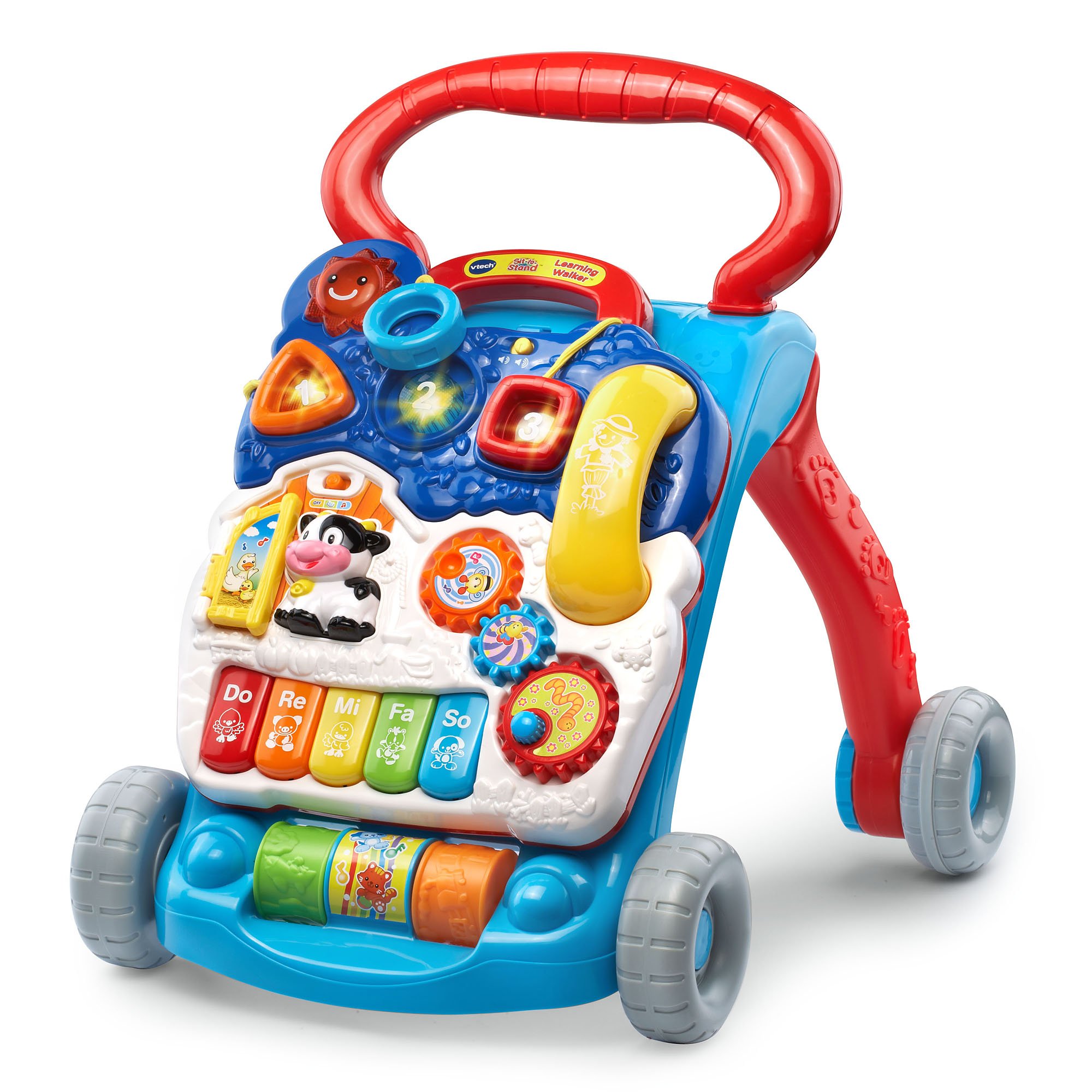
We recommend this walker if you want a sturdy, activity-packed toy that helps babies move from sitting to walking while keeping them entertained.
Pros
- Lots of activities to build fine motor skills and hand–eye coordination
- Detachable panel converts for floor play or on-the-go fun
- Adjustable speed and stable base support early walkers
Cons
- Plastic body can feel noisy on hard floors
- Wheels sometimes let the walker move faster than expected
- Battery dependence for lights and sounds
The walker mixes bright lights, music and tactile toys to encourage stepping and standing. We like that the front activity panel removes for floor play, so it stays useful as the child grows.
Buttons, piano keys and shape sorters give little hands plenty to do while babies practise standing and cruising. The toy focuses on simple skills like colours, shapes and cause-and-effect without overwhelming the child.
Adjustable wheel speed and a wide base help with stability, though some families report the wheels can move quicker than expected on smooth floors. We suggest checking floor type and supervising first walks.
Overall, the VTech Sit-to-Stand Walker offers a lot of play value for its price and keeps babies engaged as they learn to walk.
Radio Flyer Busy Buggy

We recommend this if you want a sturdy push-to-ride toy that mixes walking practice with lots of hands-on sensory play.
Pros
- Encourages walking and balance with push-walker and ride-on modes
- Many sensory activities keep toddlers busy and curious
- Handy under-seat storage for toys and snacks
Cons
- Some parts, like the steering wheel, may not turn fully
- Smaller size may fit smaller toddlers best
- Plastic build may show wear over heavy outdoor use
The Busy Buggy blends a stable push frame with 17 interactive features, so toddlers practice walking while exploring gears, beads and clicks. The mix of fine-motor activities and a low seat helps kids shift from standing to sitting play.
Assembly looks straightforward and the lightweight design moves easily around the house. The anti-tip back adds a safety layer for early walkers, though users note certain controls feel limited.
We like the storage cubby under the seat for quick toy transport and tidy play sessions. The Busy Buggy suits indoor and light outdoor use, but larger or more robust outdoor play may stress the plastic parts.
SEREED Balance Bike (Green)

We recommend this balance bike if you want a lightweight, stable ride to help toddlers learn balance and walking confidence.
Pros
- Very light and easy to carry.
- Stable four-wheel design helps beginners feel secure.
- Smooth, floor-friendly wheels for indoor and outdoor use.
Cons
- Seat may not adjust much as the child grows.
- No brakes — requires supervision on slopes.
- Small size limits long-term use as the child gets taller.
We like the SEREED for its simple design and clear focus on early balance skills. The four-wheel setup makes it forgiving for first steps and cruising while seated on the saddle.
Assembly looks straightforward and the toy’s low weight means parents can move it quickly between rooms or take it outside. The enclosed wheels and rounded edges reduce pinch risks and make the bike feel safe for 12–24 month olds.
This model aims to build confidence by letting children push and glide without pedals. Expect good short-term value for teaching walking and early steering, but plan to upgrade later as your child grows.
SYNCFUN Walker

We recommend this walker if you want a sturdy, activity-rich push toy that helps babies practise standing and stepping while keeping them entertained.
Pros
- Lots of lights, songs and buttons to keep attention.
- Detachable play panel works on the floor or on the walker.
- Two speed settings let you match baby’s stage.
Cons
- Music and lights may be too stimulating for some babies.
- Wheel tension may need frequent adjustment to control speed.
- Requires AA batteries and adult assembly.
The walker mixes a solid push frame with a removable activity panel so little ones can play sitting or standing. We found the variety of sounds and piano buttons offers plenty of distraction while babies learn to pull up and cruise.
Adjustable speed settings let carers set a gentler pace for early stages and a firmer push for older babies. The volume control and sleep mode help manage noise, but quieter homes may still find the music persistent.
The plastic build keeps the price down and the toy light enough to move, though wheel brakes might not give fine control for every child. Overall, this one fits families who want an all-in-one learning toy with lots of interactive features.
Cuterabit Sit-to-Stand Walker

We recommend this if you want an affordable, multi-activity walker that helps babies practice standing and first steps, but expect lightweight plastic and some durability trade-offs.
Pros
- Lots of activities (piano, phone, mirror, drawing board) that detach for sit-play.
- Adjustable wheel speed lets us slow down or speed up walking practice.
- Compact, easy to assemble and portable for moving around the house.
Cons
- Plastic feels flimsy and may wobble under active use.
- Some parts can detach too easily and might not stay put.
- Piano needs AA batteries (not included) and music may be basic.
The walker offers a busy front panel and a simple handle that helps babies push and stand. We like that the activity board unhooks so infants can play while seated, which stretches its use across stages.
Assembly seems straightforward from the instructions on the box and the unit is lightweight to move between rooms. The speed-adjust feature can suit cautious beginners and more confident toddlers.
Durability appears mixed based on user feedback; expect this to be fine for light use but less suitable if you want a heavy-duty heirloom toy. The value is clear: many features at a low price, with compromises in material quality and part fit.
Buy the Cuterabit Sit-to-Stand Walker on Amazon
Buying Guide
We look for toys that support balance, coordination and confidence as babies learn to walk. Safety comes first: check for non-toxic materials, rounded edges and parts that cannot detach and become choking hazards.
We prefer sturdy, wide bases that resist tipping. Lightweight wheels and smooth handles help toddlers push without straining. Adjustable height or multi-stage use adds value and longer use.
Consider sensory features that encourage movement: simple sounds, bright colours and different textures. Keep electronics minimal so the child focuses on walking, not just watching lights or music.
Ease of cleaning matters. Removable, washable fabric and wipeable plastic save time and keep toys hygienic. Also check weight — heavy toys can be hard to manoeuvre; very light toys may tip easily.
Portability and storage matter for busy families. Foldable designs or compact footprints fit small homes and travel. Choose toys that are easy to assemble and disassemble without special tools.
Use a table to compare key features at a glance:
| Feature | Why it matters | What to look for |
|---|---|---|
| Safety | Prevents injury | Rounded edges, secure parts, non-toxic |
| Stability | Reduces falls | Wide base, low centre of gravity |
| Handle & wheels | Easier pushing | Comfortable grip, smooth roll |
| Sensory elements | Encourages movement | Simple sounds, textures, colours |
| Cleanability | Hygiene & ease | Wipeable surfaces, washable parts |
We advise trying toys at home to see how your child responds. Watch for frustration or reliance on sounds, and choose items that encourage active movement.
Frequently Asked Questions
We cover specific toy types, safety features, and timing for walking skills. Our answers name brands, features, and age-appropriate options.
What are the top recommended toys for supporting a one-year-old's walking development?
We recommend sturdy push toys with wide bases, low centres of gravity, and easy-grip handles. Examples: Hape Wonder Walker, Fisher-Price Laugh & Learn Puppy, and VTech Sit-to-Stand Learning Walker.
Choose toys with non-slip wheels or wheel brakes and flat surfaces to prevent tipping. Look for toys that combine pushing with interactive elements like blocks or beads for added engagement.
Which walking toys are most suitable for a one-year-old girl?
Pick neutral-coloured push walkers and doll strollers with adjustable handles and a low, stable frame. Good choices: Global Affairs Doll Pram (stable frame) and Janod Rolling Pull Along toys (solid wood, low centre of gravity).
Include role-play items like baby dolls with a lightweight pram to encourage walking practice. Avoid long skirts, ribbons, or removable small accessories that could be a choking or tripping hazard.
What are the ideal walking toys for a one-year-old boy?
Select robust ride-on toys and push cars with a wide wheelbase, such as the Little Tikes Cozy Coupe push-along or the VTech Sit-to-Stand Walker. Wooden push trucks and chunky push tractors also work well.
Choose toys with textured grips and adjustable resistance on the wheels to suit your child’s strength. Steer clear of high seats or toys that require strong balance beyond the child’s current ability.
Can you suggest some push toys that help babies learn to walk?
Try Hape Wonder Walker for adjustable support and built-in play panels. Fisher-Price Laugh & Learn Puppy adds sound and lights for motivation without causing distraction.
Look for models with brake settings, non-slip wheels, and a handle height around the child’s waist. Test stability by pressing down on the handle; a good walker stays level and moves smoothly.
What makes a toy effective for aiding toddlers with walking?
Effective toys are stable, low to the ground, and have a handle at toddler height. They offer moderate wheel resistance so the child learns balance without the toy running away.
Interactive features that reward movement—blocks, beads, or simple sounds—encourage repeated practice. Safety matters: rounded edges, non-toxic finishes, and no small detachable parts reduce risk.
When do most children start to walk without assistance?
Most children begin taking independent steps between 9 and 15 months. Many walk steadily by 12 to 14 months, but exact timing varies.
If a child shows no weight-bearing steps by 18 months, we recommend discussing development with a healthcare professional.


0 Comments